Hidden Fleet Data: How Dealers Find New Customers Using Company Database

31.3.2026

8 min
reading time

31.3.2026
8 min
reading time
A generic database tells you that Company XY exists. It won't tell you they operate 12 Škodas, 3 of which are at the end of their lease, and the CEO just changed. Martin Střecha and Patrik Novák from BizMachine showed in a webinar how to work with automotive data — and why it's changing how dealers find customers.
"The key is to contact the right company at the right moment with the right offer," summarizes Patrik Novák approach at BizMachine.
One typical example is service. "Service is a source of sales opportunities," says Patrik Novák. Today's service customer can be tomorrow's new car buyer. Yet most dealers have no idea how many companies in their region operate vehicles of the brand they service.
Car owners outside warranty no longer need to visit authorized service centers, so they often choose cheaper independent garages. Dealers can proactively reach out and give them a reason to stay.
A dealer in Košice sets up the following filters in BizMachine Prospector:
The result? A list of all companies within reach that operate relatively young Volvos. For each company, they see:
It's not just about service. The dealer builds a relationship — a service customer eventually becomes a candidate for a new car purchase.
Practical tip: Track vehicles that left the fleet too. If a company sold your brand and bought a competitor, that's a signal. If they sold it to another company in your region, you have a potential new service customer.
Vehicle sales is undoubtedly another situation where systematic data work helps. The most successful dealer acquisitions target model against model. When you enter the market with a new SUV, you're not looking for "all companies" — you're looking for owners of aging competitive SUVs.
An Audi dealer wanted to reach owners of premium competitor vehicles (BMW, Mercedes) in their region. In Prospector, they filtered:
The goal wasn't a meeting. The goal was brand awareness. The dealer sent CEOs an Audi keychain with the text "This is your next vehicle". They raised brand awareness — and opened the door for further communication.
The Czech and Slovak market is full of companies connected through shared owners, directors, or holding structures. A small LLC can be part of a group with a fleet of 50+ vehicles.
A salesperson who doesn't know this offers a discount for 2 cars instead of a volume discount for 20. That's why we recommend checking every customer to see if they happen to own a connected company with more vehicles.
For each company, you see a "Connected Entities" section — companies linked through:
A Škoda dealer was looking for customers with potential for a larger volume offer. In Prospector, they searched for companies that on their own have maybe just 2 vehicles — but through connected entities, the total group potential is 20+ vehicles.
Process:
Result: Within the first month, they sold vehicles to two companies — plan achieved.
Fleet data is the core, but the company profile in Prospector offers more. And it's the combination of information that makes the difference between cold calling and informed outreach.
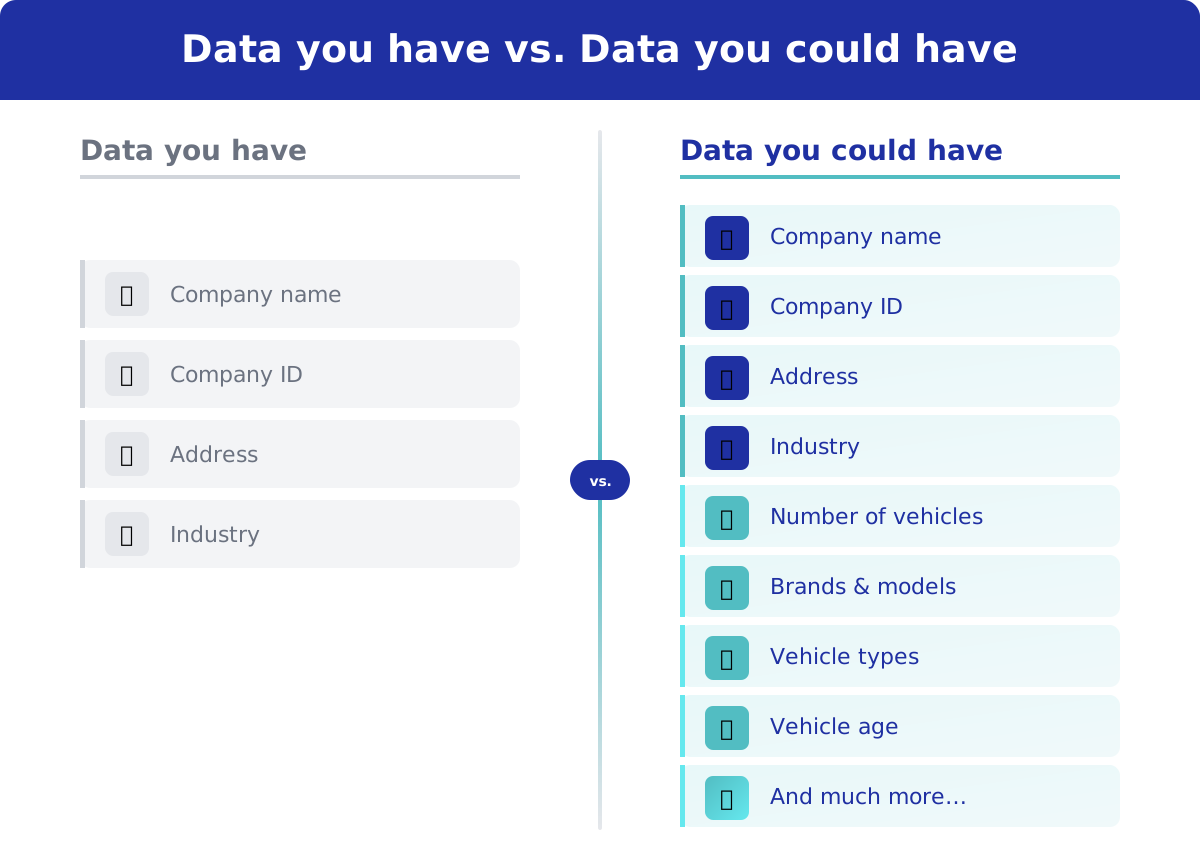
A customer comes with a request for a Mercedes. In Prospector, you see:
With this knowledge, you choose a different strategy. You know it makes sense to offer a loyalty bonus. You know the lease is ending for part of the fleet. You know the total group potential is 13 vehicles, not 5.
It's not just about who you contact. It's about when.
The key step is reaching the right person.
For companies, in addition to information about vehicles, growth, and market behavior, you can also filter for contact details for decision-makers. You can target:
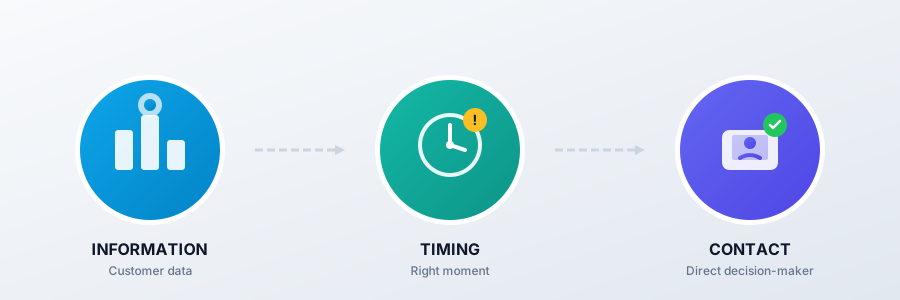
BizMachine gives you the map: you see which companies operate your brand, when their lease ends, and who decides. Strategy, offer, and relationship are in your hands — but you know which way to go.
BizMachine is the only database that provides truly in-depth data on corporate fleets in the Czech Republic and Slovakia.
BizMachine Prospector covers 238,000 fleet-owning entities in Slovakia and over 534,000 in Czechia. For every company, you can see the make, model, VIN, year of manufacture, and financing type (leasing vs. ownership). You also get ownership history and notifications about corporate changes.
The WebTracks tool identifies corporate visitors to your website, making it easy to see who is interested in your offer.
BizMachine helps you find contact details for decision-makers—CEOs, fleet managers, or procurement heads. In Slovakia, 52,000 companies have a link to contact information for a decision-maker; in the Czech Republic, there are 293,000 decision-makers with links for contact info.
BizMachine displays linked entities—companies connected through ownership stakes, shared executives, or holding structures. A firm with 2 cars might actually be part of a group with 50+ vehicles.
Are you interested in the possibilities Prospector offers? Contact BizMachine for a demo. We’ll be happy to walk you through the existing automotive data and show you how to tailor it to your requirements so you can get the most out of it.

Tereza Rejchrtova
Tereza Rejchrtova helps people understand how to use data to their advantage. She has over five years of experience in SaaS marketing, specializing in product and content marketing for B2B. She focuses on connecting complex topics with clear, accessible content.


Pernerova 697/35
186 00 Praha 8
Czech Republic

+420 735 121 860
